

Filing a Claim Without a Lawyer: Step-by-Step Legal Guide
Ever thought about handling a legal claim without big lawyer bills? It’s easier than you might think to file a claim by yourself.
Trying to get compensation for injuries caused by someone else can be done on your own. It’s great for small accidents or simple legal issues. Knowing how to file a lawsuit yourself can save you money and let you control your case.
This guide will show you how to file a claim without a lawyer. You’ll learn about the legal steps and how to present your case. You’ll get the skills to stand up for your rights confidently.
Key Takeaways
- Learn how to file a claim independently
- Understand the basics of legal claim procedures
- Save money on attorney fees
- Gain confidence in navigating legal processes
- Maximize your compensation
- Identify when self-representation is appropriate
Understanding the Basics of Filing a Claim
Going to court without a lawyer can be tough. It’s key to know the basics of legal claims. This is important if you want to handle your case yourself.
What Is a Legal Claim?
A legal claim is a formal ask for money or justice. If you file a claim without a lawyer, you’re making a case. You say you’ve been hurt or wronged and need the court’s help.
Types of Legal Claims
There are many kinds of legal claims. Each one is different:
- Personal Injury Claims: For physical or emotional harm
- Property Damage Claims: For damaged property
- Contract Disputes: For broken agreements
- Consumer Protection Claims: Against unfair business practices
Importance of Filing Correctly
Filing right is very important. Wrong steps can lead to:
- Your case being thrown out
- Missing important deadlines
- Big financial losses
- Less chance of winning
Knowing these basics will make you feel more ready and accurate in your legal claim.
Assessing Your Case
When you handle your injury case on your own, it’s important to check if your claim can win. You need to know what makes your case strong. This is key if you plan to file your accident claim by yourself.
Before you start your legal fight without a lawyer, look at a few important things. These will help you decide if you should go ahead.
Is Your Case Viable?
To see if your case can win, think about these important points:
- Do you have clear proof that someone else was careless?
- Do you have papers that show you got hurt?
- Can you prove you lost money or suffered in other ways?
- Is there a good reason for your claim under the law?
Gathering Supporting Evidence
Good evidence is the heart of a winning case. Make sure you have all the right papers:
- Medical records and reports from your treatment
- Photos of your injuries and where the accident happened
- Statements from people who saw what happened
- Police reports
- Proof from experts
Estimating Your Damages
Figuring out how much money you might get back is important. It’s very important to be accurate when you show how much your claim is worth.
Economic damages are things like:
– Medical bills
– Money you lost because you couldn’t work
– Damage to property
– Costs for getting better
Non-economic damages are things like:
– Pain and suffering
– Emotional hurt
– Loss of quality of life
– How the accident might affect you in the future
Being well-prepared and having realistic hopes are important when you’re fighting your case by yourself.
Researching Applicable Laws
When you decide to Handle Lawsuit Independently, knowing the law is key. Legal research is the core of your plan. It lets you File Insurance Claim Yourself with confidence.
Your Legal Filing Guide begins with a deep dive into laws that affect your case. The legal world can be tough, but breaking it down helps.
Understanding State and Federal Laws
Every legal claim has its own rules. Laws vary by place, affecting your case. You should look into:
- State laws that apply to your claim
- Federal rules that might count
- Deadlines for filing claims
- Legal standards in your area
Finding Relevant Precedents
Legal precedents offer valuable lessons from past cases. Learning from past decisions can boost your arguments and prepare you for challenges.
| Precedent Type | Importance | Research Method |
|---|---|---|
| Binding Precedents | Directly applies to your case | State Supreme Court decisions |
| Persuasive Precedents | Supportive but not required | Federal court interpretations |
| Historical Cases | Helps understand context | Important legal decisions |
Utilizing Online Legal Resources
Today, we have many tools for legal research. Use these online tools to find the info you need:
- Legal databases like Westlaw and LexisNexis
- Government sites with legal documents
- Online law libraries
- Legal blogs and commentary
By carefully researching laws, you’ll lay a strong base for your case. This boosts your chances of winning.
Completing the Necessary Paperwork
Handling legal papers without a lawyer can feel hard. But, with the right tips, you can do it. It’s key to have all your papers ready when you seek legal advice without a lawyer.

Knowing what forms you need and filling them out right is very important. Each place and type of claim has its own set of papers you must follow closely.
Identifying Required Forms
Each legal case needs its own set of forms. Here’s a list of common ones:
- Initial complaint or petition form
- Statement of damages
- Evidence submission documents
- Court-specific intake forms
How to Fill Out Claim Forms
When filling out legal forms, be careful and detailed. Here’s how to do it right:
- Read the instructions well
- Use black ink
- Print clearly
- Answer every question fully
- Make copies of everything
Common Mistakes to Avoid
When you represent yourself, you must be extra careful. Here are mistakes to avoid:
| Mistake | Consequence |
|---|---|
| Incomplete forms | Potential case dismissal |
| Missing deadlines | Loss of legal rights |
| Incorrect information | Potential legal complications |
Pro tip: Double-check every document before submission to ensure accuracy and completeness.
Filing Your Claim
Filing a legal claim without a lawyer needs focus and knowledge of court rules. Court Forms Without Lawyer might look hard, but you can do it. Just follow the right steps.
Knowing where and how to File Claim Online is very important. Each place has its own rules. You must follow these rules carefully to make sure your claim is handled right.
Choosing the Right Filing Location
Choosing the right court is based on a few things:
- Type of legal claim
- Monetary value of the claim
- Geographic jurisdiction
- Specific court requirements
Understanding Filing Fees
Fees for filing vary by place and claim type. Some courts help if you can’t pay. Here’s what fees usually are:
| Claim Type | Typical Filing Fee | Fee Waiver Eligibility |
|---|---|---|
| Small Claims | $30-$100 | High |
| Civil Claims | $100-$400 | Moderate |
| Complex Litigation | $500+ | Low |
Confirming Your Claim Submission
After you file, always ask for a confirmation number or receipt. Check the court’s website or call the clerk to see if your claim was accepted. In Florida, defendants must be served within 120 days of filing.
Keep copies of all your documents. Good record-keeping is important for a successful DIY lawsuit.
Communicating with the Other Party
Talking to the other side in legal matters needs a smart plan. When you’re on your own, talking well is key in Small Claims Court. How you share your side can really change the result of your case.
Winning without a lawyer means talking clearly and professionally to the other side. The first step is a good demand letter.
Drafting a Demand Letter
A demand letter is your formal ask for a solution. It should have:
- A clear story of what happened
- What you want in return
- Proof of your case
- A deadline for them to reply
Key Components of the Letter
Write your letter carefully and professionally. Stick to the facts, skip emotional words, and stay polite.
| Component | Description |
|---|---|
| Sender Information | Your full name and how to reach you |
| Recipient Details | Who you’re writing to and where they live |
| Incident Description | A step-by-step, true story |
| Compensation Request | Exactly how much money you want |
Tips for Effective Communication
Here are some tips for talking to the other side on your own:
- Keep records of all talks
- Be direct and to the point
- Stay calm and professional
- Save copies of everything you send
Talking well can sometimes fix problems without going to court. This saves time and money.
Preparing for Possible Mediation
When you’re suing without a lawyer, mediation is a big step. It’s a way to solve your case without going to court. This can save time and money.
Mediation is a place where you and the other side talk with a neutral person. If you’re suing yourself, knowing how mediation works is key. It helps you plan your case better.
Understanding Mediation
Mediation is a way to talk things out and find a solution. It’s not like a court trial. You can talk directly and find a way to agree.
- It’s less formal than court
- You can talk directly
- It’s often faster and cheaper
Preparing Your Arguments
Getting ready for mediation means being organized. You need all your documents and evidence ready. Also, have a clear story of your case.
| Preparation Step | Key Actions |
|---|---|
| Document Organization | Gather all supporting evidence chronologically |
| Argument Clarity | Develop a concise, logical explanation of your claim |
| Realistic Expectations | Understand possible compromise scenarios |
The Role of a Mediator
A mediator helps you talk things out. They guide the conversation. They don’t decide but help you find a solution.
Knowing the mediator’s role can help you negotiate better. It can lead to a successful outcome in your case.
Understanding the Litigation Process
When you decide to file an accident claim on your own, knowing the court system is key. The process can be hard and scary if you don’t have a lawyer.

Going to court needs a lot of prep and knowing the rules. A No Lawyer Claim Guide helps you understand how to go through the court system.
What to Expect in Court
There are important steps in litigation that you need to know:
- Initial case filing and documentation submission
- Discovery phase for gathering evidence
- Pre-trial motions and conferences
- Potential settlement negotiations
- Trial proceedings
Key Legal Terms to Understand
Knowing legal words is key for representing yourself:
| Legal Term | Definition |
|---|---|
| Plaintiff | The person starting the legal claim |
| Defendant | The person being sued |
| Burden of Proof | Legal duty to prove claims with evidence |
| Motion | Formal request to the court for a ruling |
Typical Court Case Timeline
Knowing how long it might take helps set expectations:
- Initial Filing: 1-2 months
- Discovery Phase: 3-6 months
- Pre-Trial Motions: 2-4 months
- Trial Preparation: 1-2 months
- Actual Trial: 1-2 weeks
Self-representation is hard but doable with hard work and knowing the law. With the right prep and dedication, you can make it through the court process without a lawyer.
Navigating Small Claims Court
Small claims court is a way to solve legal problems without spending a lot of money. It’s for people who want to handle their case by themselves. This court is good for small money issues.
Eligibility for Small Claims
To use small claims court, you need to know if you can. Most places let you sue for up to $5,000. But, some places have different rules:
- Personal injury disputes
- Property damage claims
- Contract disagreements
- Landlord-tenant conflicts
Small Claims Court Procedures
The rules in small claims court are easy to follow. This helps people who don’t have a lawyer. The main steps are:
- Filing a formal complaint
- Paying minimal court fees
- Serving official notice to the defendant
- Preparing documented evidence
- Presenting your case before a judge
Pros and Cons of Small Claims
Knowing the good and bad points of small claims court is important. Pros include lower costs and faster resolution. But, there are downsides like not getting much money and simpler rules.
Being well-prepared is key when you don’t have a lawyer. Collect all your documents and make a clear, simple argument. This can help you win your case.
Building Your Case Narrative
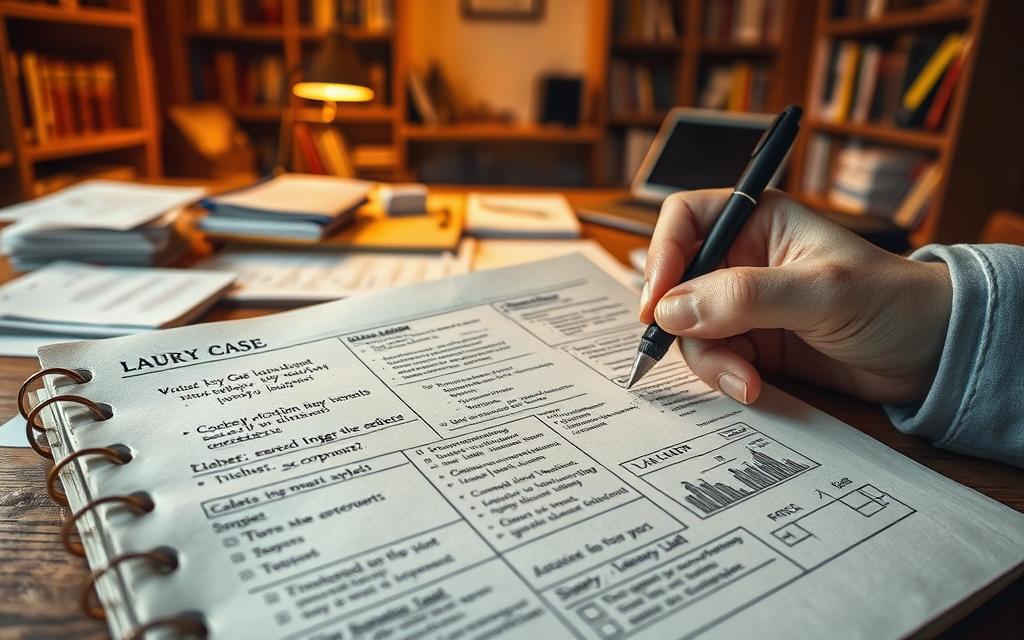
Creating a strong case narrative is key when you handle a lawsuit by yourself. How well you tell your story can really change the outcome. It’s all about making a clear, logical argument that wins your case.
Constructing a Clear Argument
A good legal argument needs a plan. For Injury Case Self-Help, remember these important points:
- Find the main issue of your claim
- Make a timeline of events
- Link actions to legal reasons
- Think about what the other side might say
Using Evidence Effectively
Evidence is the heart of your case. Organize your documents well to make a strong story:
- Gather all important documents
- Sort evidence by type and importance
- Make a timeline of events
- Show how evidence supports your claim
Engaging Witnesses
Witnesses are very important when you handle a lawsuit alone. When picking and getting ready witnesses, keep these tips in mind:
- Pick witnesses who are believable and fair
- Make sure their statements are clear and short
- Practice for cross-examination
- Make sure their stories match yours
Remember, a well-made case narrative turns random facts into a strong legal story. This story can convince judges and help your case.
Presenting Your Case
When you handle your own Personal Injury Pro Se case, how you present in court is key. You need to prepare well and speak clearly.
Being good at filing claims without a lawyer means knowing how to act in court. You must be confident and professional.
Courtroom Presentation Strategies
Being effective in court means a few important things:
- Dress professionally and conservatively
- Speak clearly and concisely
- Maintain respectful body language
- Organize your evidence meticulously
Courtroom Etiquette Essentials
When you represent yourself, it’s important to follow court rules:
- Always address the judge as “Your Honor”
- Stand when speaking
- Wait to be acknowledged before presenting arguments
- Remain calm and composed
Communicating with the Judge
Talking to the judge is very important. Speak directly, truthfully, and succinctly. Stick to the facts and avoid getting emotional.
Practice what you want to say so you can be clear and precise. The judge wants to understand your case. How well you explain it can really help your case.
Final Thoughts on Self-Representation
Handling a DIY injury claim needs careful thought and planning. Filing a personal injury lawsuit by yourself can be tough. But, with the right steps, you can manage your legal process well.
Deciding to file a lawsuit by yourself has its ups and downs. You might save money and feel in control. But, the legal world is complex. You need to know if you can handle it.
Experts say to think hard about your case before you decide to do it yourself. Some cases are simple. But others need a lawyer’s help. Courts have resources like self-help centers and legal aid groups to help you.
Success in a DIY injury claim comes from knowing the law, collecting strong evidence, and making a clear case. Doing it yourself can be powerful. But, knowing when to ask for help is key. Stay focused, ready, and open to changing your plan as needed.